To register an interest in making an instruction call
+44 (0)20 7404 5252 or

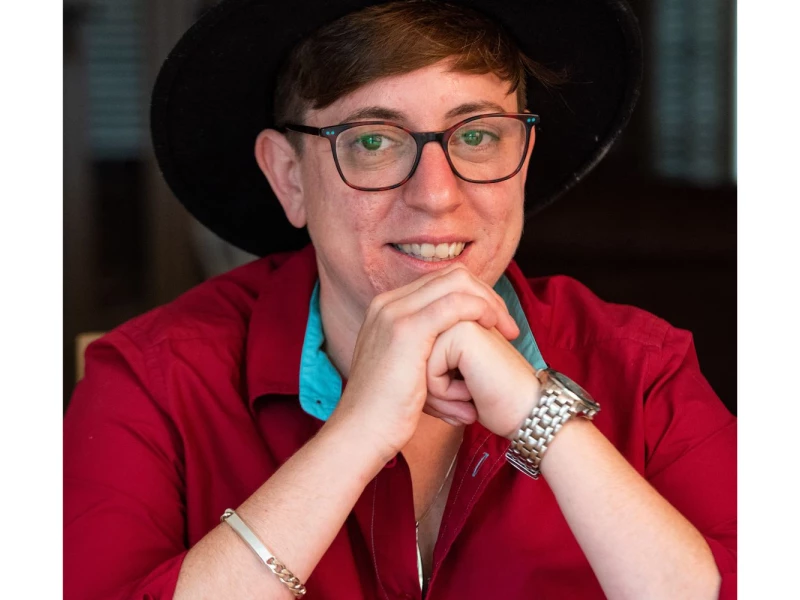
Rosa Freedman is the inaugural Professor of Law, Conflict and Global Development at the University of Reading. She received her LLB, LLM and PhD from the University of London, and is a non-practising barrister and member of the Honourable Society of Gray’s Inn. Freedman’s research focuses on the UN and human rights. She has published extensively on UN human rights bodies and systems, and on UN peacekeeping and accountability for human rights abuses. Her published work includes three monographs, five co-edited collections, and articles in the leading international law journals. She has written policy reports commissioned by national and regional bodies and parliaments and regularly appears in national and international media. Freedman is a visiting fellow at the London Centre for the Study of Contemporary Antisemitism and the co-editor of the Routledge book series on contemporary antisemitism. She has served as a member of the UN Secretary-General’s Civil Society Advisory Board on prevention of sexual exploitation and abuse, a Specialist Adviser on safeguarding to the UK government International Development Committee, and currently sits on a UK FCDO Steering Committee.
Sexual exploitation and abuse occurs in all conflict and crisis zones and all-too-often is perpetrated by the very people sent to protect local communities and people. These include peacekeepers, humanitarian workers, and other international actors. While the majority of those personnel perform their jobs with courage, dedication and professionalism. Yet those who commit sexual offences bring shame on the entire system and betray the trust of those that they have been sent to protect. While there has been general agreement within international organisations, states and civil society that this needs to be addressed, very few practical solutions have been proposed let alone implemented. A key problem is that the current laws, policies and practices to tackle sexual exploitation and abuse operate across different scales, including at the international level, at the UN level, at the local level where the peacekeeping operation is being carried out, and within the countries that contribute troops to peacekeeping operations. As a result, very few effective solutions have been designed that can address the causes and consequences of peacekeeper sexual exploitation and abuse.
Together with Sarah Blakemore, CEO of Keeping Children Safe, Rosa Freedman leads a research and advocacy project to provide robust, evidence-based solutions to implement safeguarding in conflict and crisis zones. Keeping Children Safe is a global network of organisations committed to child safeguarding and actively influencing others to adopt International Child Safeguarding Standards. Its establishment in 2001 coincided with the exposure of widespread sexual exploitation and abuse carried out by over 40 humanitarian aid agencies of children in refugee camps in Guinea, Liberia and Sierra Leone. Specifically, a report published in February 2002 by UNHCR and Save the Children detailed numerous complaints indicating that UN peacekeeping personnel and humanitarian aid workers had demanded sex for food, shelter, education and medicine. In response, Keeping Children Safe in collaboration with experts developed a set of International Child Safeguarding Standards supported by a comprehensive toolkit for implementing the standards.
Publications
Safeguarding in Conflict and Crisis (Forced Migration Review, 2019)
Child safeguarding in a peacekeeping context: lessons from Liberia (Development in Practice, 2018)
Safeguarding Children from UN Sexual Exploitation and Abuse in Haiti (Policy Report, 2018)
Safeguarding Children from UN Sexual Exploitation and Abuse in Uruguay (Policy Report, 2018)
Safeguarding Children in UN Peacekeeping Operations: Guide to the Toolkit (Policy Report, 2017)
Training and Toolkits
Training UN peacekeepers in child safeguarding
The Ministry of National Defence in Uruguay, in partnership with the project team, launched a groundbreaking training guide on safeguarding children from exploitation and abuse in the context of UN peacekeeping missions. The previous year, Uruguay became the first country in the world to formalise its commitment towards child safeguarding with the signing of a policy for personnel deployed to UN peacekeeping missions. See the Ministry’s policy launch page for more information (Spanish).
Department for International Development Assessments of Humanitarian Partners
DfID commissioned the project team to carry out safeguarding-specific central assurance assessments (CAAs) on 31 CSOs who between them account for over £2 billion of DFID/UK Aid funding and deliver DFID-funded programmes in more than 30 countries across Africa, Asia and the Middle East. The CAAs focused on the central corporate level of organisations and included a thorough review of SEAH policies, procedures, documentary evidence, interviews with key staff, focus group discussions and visits to head offices. The Child Safeguarding Due Diligence standards developed for the projects were published here.
This ground-breaking introductory course is based on evidence from a five-year research project on child safeguarding in peacekeeping operations and was coproduced with military advisers, serving personnel, legal scholars, safeguarding practitioners and communities affected by peacekeeping operations. The course explains the important differences between child protection and child safeguarding and the various international agreements that underpin these concepts. It will provide an introduction to responsibilities, relevant theory and examples of good practices to help participants understand how to better safeguard children from abuse and exploitation in the context of peacekeeping.
The Law and Practice of Peacekeeping: Foregrounding Human Rights (Cambridge University Press, 2021) (with Nicolas Lemay-Hebert and Siobhan Wills)
Failing to Protect: The United Nations and the Politicisation of Human Rights, (New York: Oxford University Press; London: Hurst, 2014)
The UN Human Rights Council: A Critique and Early Assessment, (London: Routledge, 2013)
Responses to 7 October (Routledge, 2024) (with David Hirsh)
The United Nations Special Procedures ‘System’ (Brill, 2017) (with Aoife Nolan and Therese Murphy)
Hybridity: Law, Culture and Development (Routledge, 2017) (with Nicolas Lemay-Hebert)
‘International human rights law’, In: Evans, M. (eds.) International Law (6th Edition. Oxford University Press, 2024)
‘Safeguarding children from sexual exploitation and abuse in peace operations: lessons for the future’, In: Gilder, A. , Curran, D. , Holmes, G. , Edu-Afful, F. , (eds.) Multidisciplinary Futures of UN Peace Operations. Rethinking Peace and Conflict Studies (Palgrave Macmillan, 2023) (with Sarah Blakemore and Nicolas Lemay-Hebert)
‘Sex and gender in law’. In: Sullivan, A. and Todd, S. , (eds.) Sex and Gender: A Contemporary Reader (Routledge, 2023) (with Rosemary Auchmuty)
‘Civil society and the UN human rights system’, In: Ramcharan, B. , Brett, R. , Clark, A. , Parker, P., (eds.) The Protection Roles of Human Rights NGOs. International Studies in Human Rights (Brill 2022) (with Samuel Gordon)
‘Office of the high commissioner for human rights’, In: Binder, C. , Nowak, M. , Hofbauer, J. , Janig, P., (eds.) Elgar Encyclopedia of Human Rights. (Edward Elgar, 2022) (with christen Broecker)
‘An international law perspective on the challenges confronting the Human Rights Council’. In: von Arnauld, A. , von der Decken, K. , Matz-Lück, N. , (eds.) German Yearbook of International Law. (Duncker & Humblot, 2021) (with Samuel Gordon)
‘The United Nations Human Rights Council’ in Philip Alston and Frederic Mégret (eds.) The United Nations and Human Rights: A Critical Appraisal (Oxford University Press, 2020)
‘Transnational engagements: cultural and religious practices related to menstruation’ in Maharaj, T. and Winkler, I. , (eds.) The Palgrave Handbook of Critical Menstruation Studies. (Springer, 2020)
‘You can take the person out of the institution: A response to Jan Klabbers' in Bardo Fassbender and Knut Traisbach (eds) The Limits of Human Rights (Oxford University Press, 2019) (with Ruth Houghton)
‘The United Nations Human Rights Council’ in Philip Alston and Frederic Mégret (eds.) The United Nations and Human Rights: A Critical Appraisal (Oxford University Press, 2019)
‘Human Rights and UN Immunities’ in Tom Ruys (ed) Handbook on Immunities in International Law (Cambridge University Press, 2019) (with Nicolas Lemay-Hebert)
‘The United Nations’ in in D.S. Lewis and Wendy Slater (eds), The Annual Register (ProQuest, 2018)
‘Introduction’ in Aoife Nolan, Rosa Freedman and Therese Murphy (eds.) The United Nations Special Procedures ‘System’ (Brill, 2017) (with Aoife Nolan and Therese Murphy)
‘Supporting or Resisting? The Relationship between Global North States and Special Procedures’ in Aoife Nolan, Rosa Freedman and Therese Murphy (eds.) The United Nations Special Procedures ‘System’ (Brill, 2017) (with Francois Crépeau)
'The United Nations’ in D.S. Lewis and Wendy Slater (eds), The Annual Register (ProQuest, 2017)
‘Critical Hybridity: Exploring Cultural, Legal and Political Pluralism’ in in Rosa Freedman and Nicolas Lemay-Hebert (eds.) Hybridity: Law, Culture and Development (Routledge, 2017) (with Nicolas Lemay-Hebert)
‘Peace as a Hybrid Human Right: A New Way to Realise Human Rights, or Entrenching Their Systematic Failure?’ in Rosa Freedman and Nicolas Lemay-Hebert (eds.) Hybridity: Law, Culture and Development (Routledge, 2017) (with Philipp Lottholtz)
‘Hybrid Human Rights’ in Paul Jackson (ed), Research Handbook on Security and Development (Edward Elgar; 2015), 386-401
‘Politicisation of human rights: current battlegrounds and sites of contestation’ (2024) University of Western Australia Law Review, 51 (1). pp. 1-22
‘Appraising the Socio-Economic Turn in Reparations: Transitional Justice for Cholera Victims in Haiti’ International Journal of Transitional Justice (2021) 1-20 (with Nicolas Lemay Hebert)
‘Seeking Justice for the Victims of Cholera in Haiti: Framing the Reparations Debate through Transitional Justice’. 43(3) Human Rights Quarterly (2021) 567-585 (with Nicolas Lemay-Hebert and Louis Monroy-Santander)
‘The office of the high commissioner for human rights’ in Nowak, M. , Hofbauer, J. , Janig, P. , Binder, C. , (eds.) Elgar Encyclopedia of Human Rights (2021, Edward Elgar (with Christen Broecker)
‘The Security Council in Practice: Haiti, Cholera, and the Elected Members of the United Nations Security Council’ Leiden Journal of International Law (2020) (with Nicolas Lemay-Hebert)
‘Safeguarding in Conflict and Crisis’, 61 Forced Migration Review (2019) 52-55 (with Sarah Blakemore)
‘Child Safeguarding in a Peacekeeping Context: Lessons from Liberia’, Development in Practice DOI: 10.1080/09614524.2019.1614148 (with Nicolas Lemay-Hebert and Sarah Blakemore)
‘UN-Accountable: A New Approach to Sexual Violence and UN Peacekeeping’ 29 (3) European Journal of International Law 961-985
'‘Two Steps Forward, One Step Back: The UN Human Rights Council at 10’ Human Rights Law Review (2017), 1-17 (with Ruth Houghton)
‘Expanding or Diluting Human Rights?: The proliferation of United Nations Special Procedures mandates.’ 38 (1) Human Rights Quarterly (2016), 164-193 (with Jacob Mchangama)
‘”Jistis ak reparasyon pou tout viktim kolera MINUSTAH”: The United Nations and the Right to Health in Haiti’ 28 (3) Leiden Journal of International Law (2015), 507-527 (with Nicolas Lemay-Hebert)
Towards an alternative interpretation of UN immunity: A human rights-based approach to the Haiti Cholera Case’, QIL-Questions of International Law, Zoom-in 19, (2015), 5-18 (with Nicolas Lemay-Hebert) (paper by invitation)
'UN Immunity or Impunity?: A human rights based challenge’, 25 (1) European Journal of International Law, (2014), 239–254
‘Third Generation’ Rights: Is there room for hybrid constructs within International Human Rights Law?’, 2 (4) Cambridge Journal of International and Comparative Law (2013), 935-959
‘The United Nations Human Rights Council: More of the same?’, 31 (2) Wisconsin Journal of International Law (2013), 209-251
‘New Mechanisms of the UN Human Rights Council’, 29 (3) Netherlands Quarterly of Human Rights (2011), 289–323
The United States and the Human Rights Council: An Early Assessment’, 23 (1) St Thomas Law Review (2010), 23-70
‘Public Awareness of Human Rights: Distortions in the Mass Media’, 14 (4) International Journal of Human Rights (2010), 491-523 (with Eric Heinze 50% - 50%.
‘Improvement on the Commission?: The UN Human Rights Council’s Inaction on Darfur’, 16 (1) University of California-Davis Journal of International Law & Policy (2009), 81-129
‘A Roadmap for the UN to Resolve the Haiti Cholera Dispute’, Georgetown Journal of International Affairs (13 April 2017) (with Nicolas Lemay-Hebert, Paul Pierre & Krister Thelin)
‘UN-Accountable?: A Response to Devika Hovell’, 110 AJIL Unbound 8 (2016). (by invitation)
‘Quel Role pour le Canada en Haïti’, Bulletin FrancoPaix 1(5), (2016) (by invitation) (with Nicolas Lemay-Hebert)
‘Reform of selection process needed to strengthen Special Procedures’, International Service for Human Rights, (20 May, 2016) (by invitation)
‘Human Rights Protection: Ought the United Nations to have an increasing or diminishing role?’, Cicero Foundation Great Debate Paper No. 14/06 (July, 2014) (by invitation)
‘Failing to Protect: Systemic weaknesses within the UN human rights machinery’ Universal Rights Group (7 July 2014) (by invitation)
‘The Impact of Conflating Sex and Gender Identity’, written evidence submitted to the Scottish Parliament, date published 26 November 2018 (by invitation), available at: http://www.parliament.scot/S5_European/Inquiries/CTEEA_CensusBill_FreedmanProfRosa_AuchmutyDrRosemary_CTEEA_S5_18_CB_11.pdf
‘Safeguarding Children from UN Peacekeeper Sexual Exploitation and Abuse in Haiti’, Keeping Children Safe, May 2018
‘Safeguarding Children from UN Peacekeeper Sexual Exploitation and Abuse: Uruguay Workshop Report’, Keeping Children Safe, March 2018
‘The Constant Expansion of Human Rights and its Impact on Their Promotion and Protection’, policy report written for the European Parliament, January 2018 (by invitation) available at: http://www.europarl.europa.eu/RegData/etudes/STUD/2018/603865/EXPO_STU(2018)603865_EN.pdf
‘Safeguarding Children in UN Peacekeeping Operations: Guide to the Toolkit’, Keeping Children Safe, ‘Safeguarding Children from UN Peacekeeper Sexual Exploitation and Abuse in Liberia’, Keeping Children Safe, October 2017
‘The Global Humanitarian System Inquiry’, written evidence submitted to the International Development Committee, date published 23 February 2016, available at http://data.parliament.uk/writtenevidence/committeeevidence.svc/evidencedocument/international-development-committee/the-global-humanitarian-system/written/28425.html
‘Introduction to the United Nations’, SAGE Knowledge (1 June 2016)
‘Sri Lanka: Slaughter of the Tamils, and the UN Response’ SAGE Knowledge (1 June 2016)
‘Defamation of Religion’ SAGE Knowledge (1 June 2016)
Modules on the United Nations and Protection Mandates, UK FCO Diplomatic Training Academy (Spring 2017)
There are currently no news posts associated with this barrister.